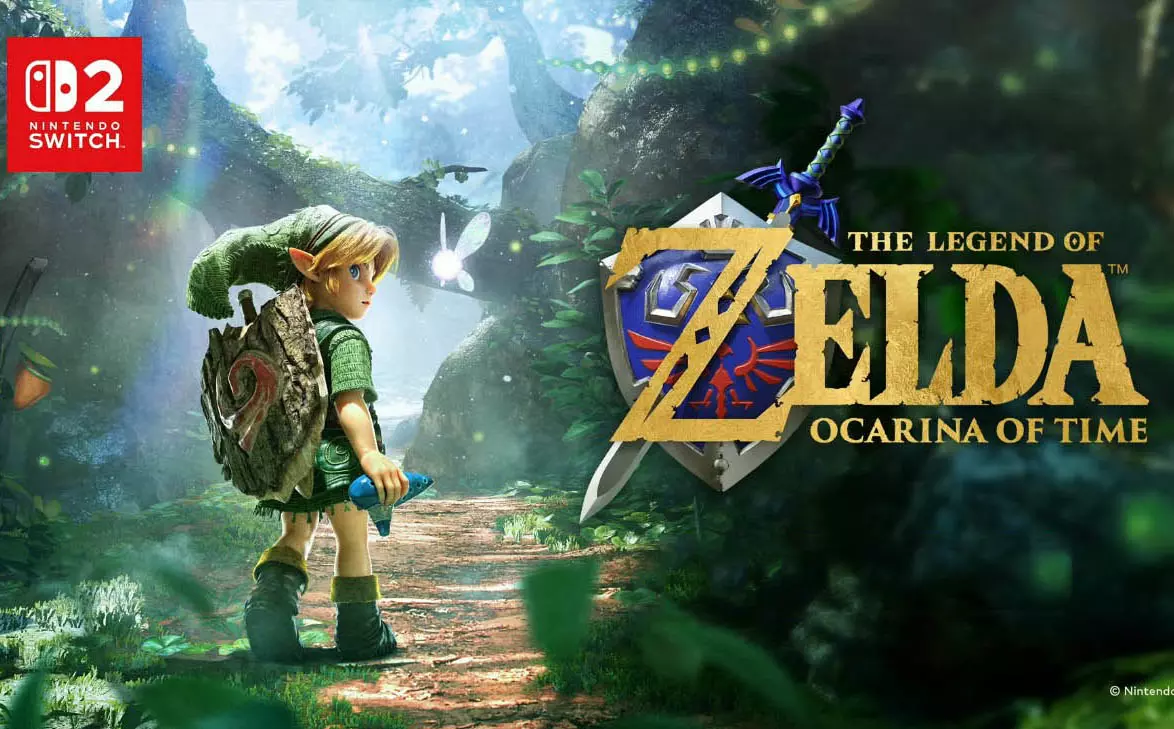
What makes the story memorable is not its complexity, but its emotional impact. The transition from child Link to adult Link gives players a powerful sense of loss and growth. Locations that were once vibrant become ruined, and familiar characters change over time, creating a surprisingly mature narrative for its era.
Ocarina of Time introduced many mechanics that served to become industry standards to how adventure games should be build.
The gameplay balances combat, exploration, puzzle solving, and storytelling exceptionally well.
Each dungeon presents unique mechanics and memorable boss encounters.
From navigating the twisting corridors of the Forest Temple to conquering the infamous Water Temple, the game constantly challenges players in new ways.
Each dungeon feels satisfying to accomplish, and comes with a mini-map of the current position you're at with highlight of targets of interest or enemies.
- Forest Temple
- Spirit Temple
- Shadow Temple
- Fire Temple
Visuals
At release, Ocarina of Time represented the cutting edge of 3D gaming. While the visuals have understandably aged, the game's artistic direction continues to hold up better than many of its contemporaries.
Character models may look simplistic today, but strong environmental design and color choices preserve the game's charm.
Available FunctionsZ-targeting lock-on combat
Context-sensitive action buttons
Seamless 3D exploration
Puzzle-focused dungeon design
Horseback travel with Epona
Ocarina Music
Flute (The most unique feature of any RPG is the way it let's you play music in an organic way)
Even though the game's map is small by today's standards, it creates a powerful sense of adventure. Every location serves a purpose and contains secrets worth discovering.
Launch Trailer
Combat
The combat system is what transcended for all souls-like games, it's got a deep and compelling fighting mechanics.
Hyrule feels alive and interconnected. Every region has its own identity.
Music
Composer Koji Kondo created one of gaming's most recognizable soundtracks that includes:
- Zelda's Lullaby
- Song of Storms
- Gerudo Valley
- Lost Woods
- Hyrule Field Theme
🧠 Verdict
SuperDeals
Date: 09-Nov-26